Albuquerque (505) 336-4254 · 5850 Eubank Blvd NE, Suite B60
Maximum Impact Physical Therapy

Balance & Gait Disorder Therapy in Albuquerque

Feeling unsteady on your feet changes how you move, where you go and what you are willing to try. Balance is trainable, and rebuilding it starts with finding out why it slipped.

01What Causes It

What causes balance and gait disorders?

Balance depends on three systems working together: your inner ear, your vision and the sensation from your feet and joints. Your muscles then have to respond quickly enough to keep you upright. A problem anywhere in that chain can make walking feel less steady. Often more than one thing is involved, which is why a generic exercise sheet rarely solves it.
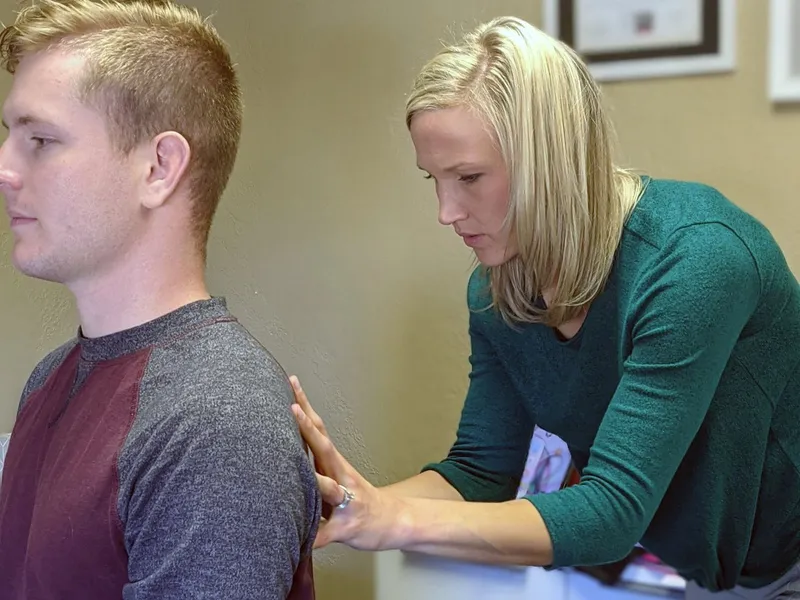
Physical therapist assessing a seated patient's posture and upper back during an evaluation

The inner ear helps your brain sense head position and movement. Conditions such as BPPV or vestibular neuritis can cause dizziness and unsteadiness, especially when you turn your head or move quickly.

Strength in the hips, thighs and ankles lets you catch yourself when you trip or step on uneven ground. Muscle strength tends to decline with age and inactivity, which makes recovering from a stumble harder.

Peripheral neuropathy, often linked to diabetes, reduces the feedback your feet send to your brain. Without that information, uneven sidewalks and trails become harder to manage.

Stroke, Parkinson's disease, traumatic brain injury and other neurological conditions can affect coordination, walking speed and step length. Specific, repeated practice is a key part of rehab for these changes.

Your eyes help you judge distance, edges and movement. Cataracts, outdated glasses, bifocals on stairs and low light all make it harder to read the ground in front of you, so your other balance systems have to work harder.

After a fall or a near miss, many people start moving less. Less activity leads to weaker muscles and less practice at balancing, which raises the chance of another fall.

Some medications, blood pressure changes, vision problems and dehydration can cause lightheadedness or unsteadiness. Your physician should review these, and we will flag anything we notice.
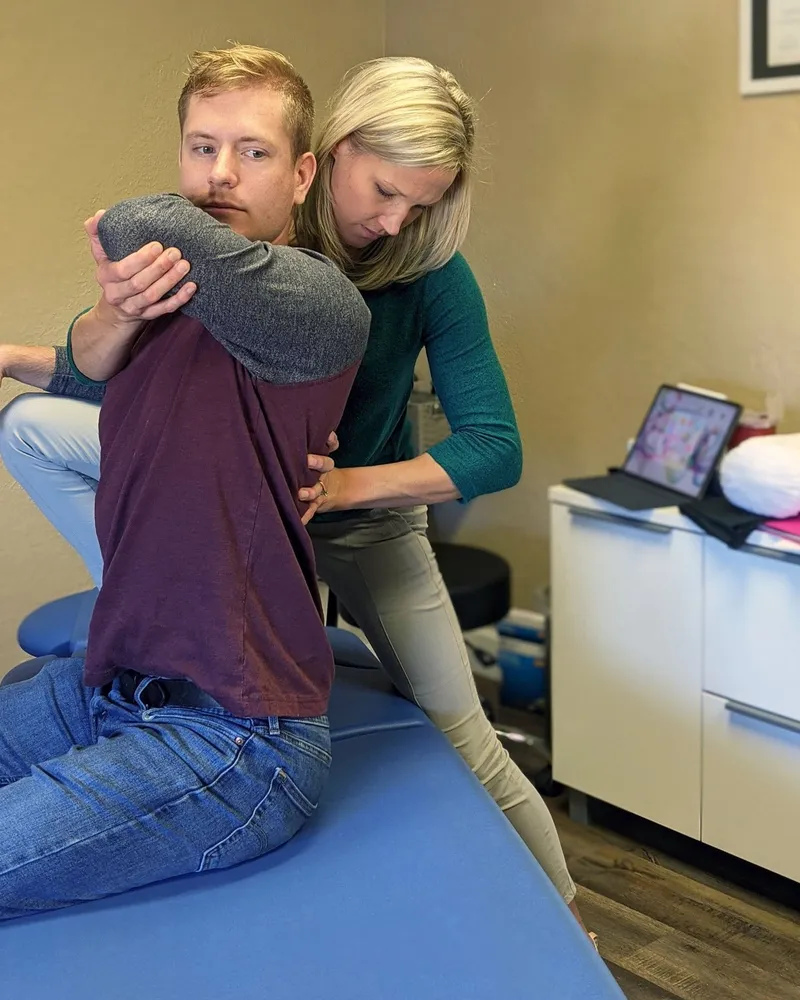
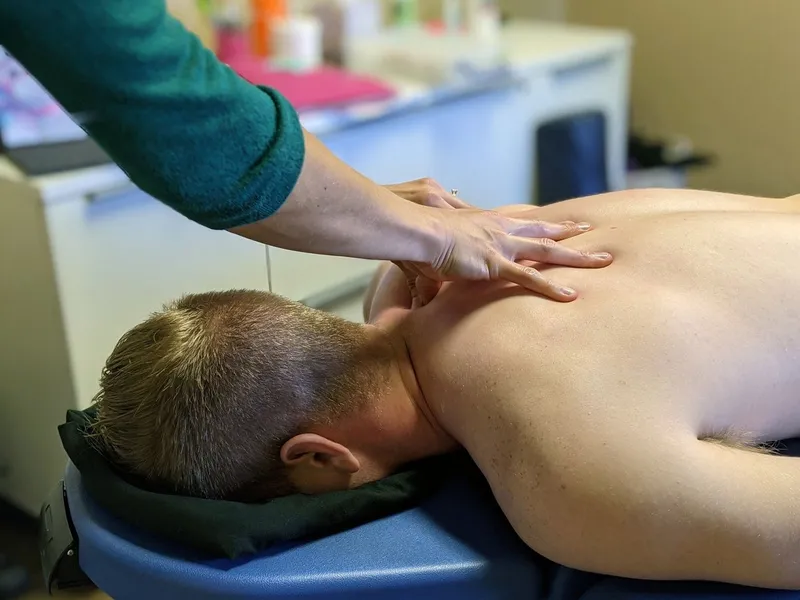
Physical therapist guiding a seated patient through an assisted rotation stretch for the trunk and shoulder
02How PT Helps

How physical therapy in Albuquerque helps.

Balance training works best when it is specific to you. Your evaluation looks at strength, joint mobility, how you walk, how you turn and how you respond when your balance is challenged, so we can find which part of the system needs the most help. Every session is one-on-one with a doctor of physical therapy (DPT) or licensed physical therapist assistant (PTA) for the whole appointment, which matters when you are practicing movements that feel uncertain.

Treatment centers on progressive strength, stability and walking practice, from stepping strategies to turning and getting up from the floor. Muscle Activation Techniques can identify muscles around the hips, knees and ankles that are not firing well so we can get them contributing again. Members of our team have worked with people after stroke, brain injury and repeated falls, and one of our PTAs holds LSVT BIG certification for Parkinson's disease. We progress at a pace that keeps you safe while you build steadier footing and more confidence.

You do not need a physician referral to start physical therapy in New Mexico. Most patients come in once a week, and a few benefit from twice. Between visits, you follow a home program built for your body and your goals, so the work keeps going outside the clinic.

03What To Expect

What to expect from your recovery.

01

Phone consult and safe starting point

We start with a phone consultation, then a 1 hour 15 minute evaluation of your strength, walking and balance. We identify your main risks, talk through any recent falls or near misses, and decide where it is safe to begin.

02

Progressive strength and balance work

Full treatments of about 50 minutes build leg and core strength and challenge your balance in controlled ways that get gradually harder as you improve.

03

Confidence in daily life

We practice the situations that matter to you, like stairs, curbs, uneven ground and getting up from the floor, with a home program to keep improving between visits.

In Their Words
The staff is very friendly, professional, and attentive to your needs. They listen to you and, with your input, develop a plan of action for your recovery. I highly recommend Maximum Impact.
Google review
Related Conditions

Pain rarely travels alone.

Schedule Appointment

Ready when you are.

HoursMon-Thu 8:00am-6:00pm, Fri 8:30am-4:30pm
Schedule Appointment. We'll be in touch shortly.
Step 1 of 5
First things first. What's your name?
We'll need a name to book you in.
Best number to reach you?
A phone number is the quickest way for us to reach you.
And your email?
We'll send your confirmation here.
What questions do you have about your balance?
A few words is all we need.
Look right? Send it.
✓
Request received.

We'll call within business hours to lock in your time.

Schedule Appointment