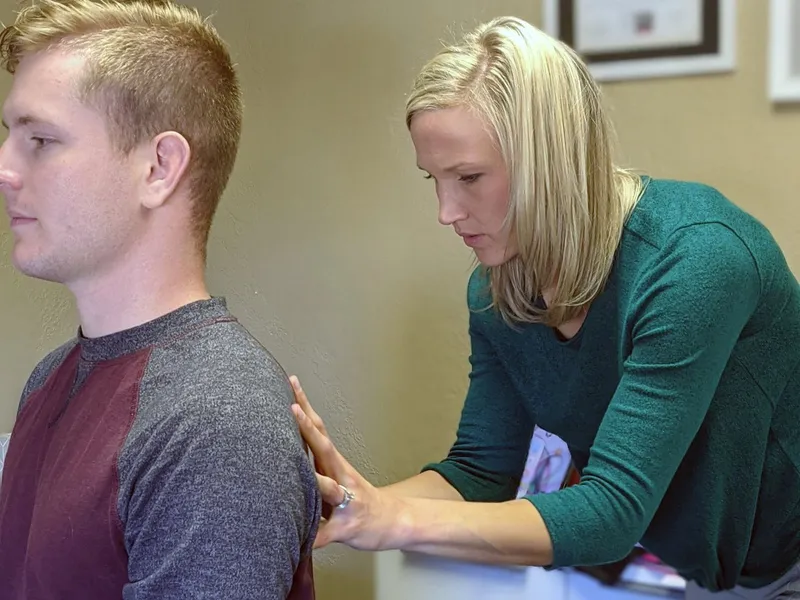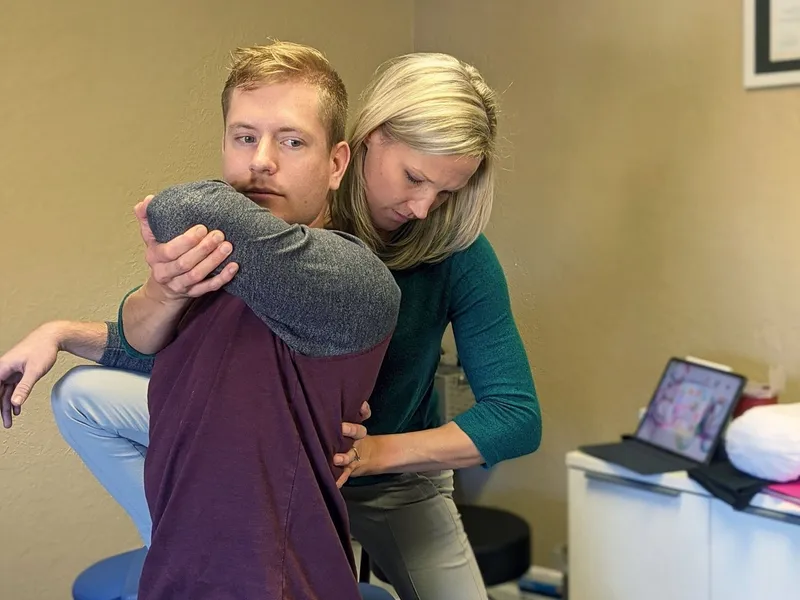
Thin needles that help irritated nerves settle and guarded muscles let go, so we can treat where your pain starts, not just where it hurts.

If you have stretched, foam rolled and rested and the knots keep coming back, the knot may not be the real problem. Nerve inflammation is a major driver of chronic pain. It can build from overuse, physical trauma, emotional stress, dehydration or training too hard. When a nerve gets irritated, the muscles around it tighten up to protect it. That reaction is well-meaning, but over time it can cause more pain than it prevents, and that is the tight, knotted feeling so many people live with.
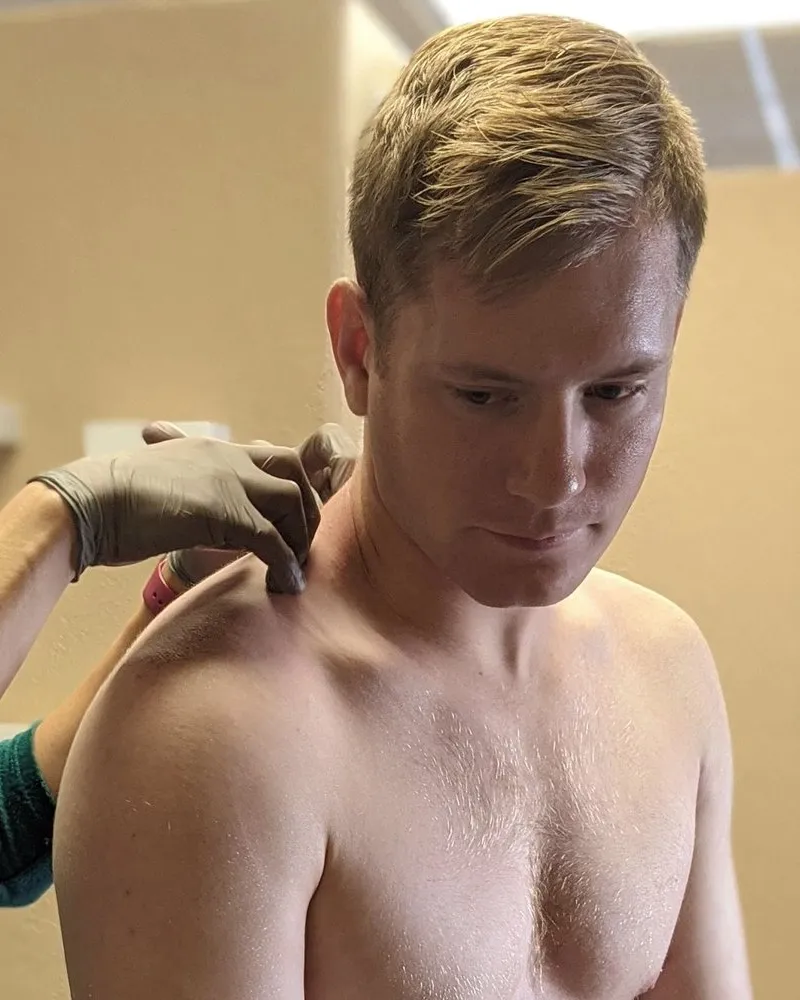
Integrative dry needling looks at the whole system. Your therapist addresses muscle pain and trigger points, and also targets homeostatic points: specific nerve points throughout the body that respond well to stimulation. Thin needles are gently tapped into the area, much like acupuncture looks from the outside. Stimulating these points helps the nervous system relax and inflammation calm down, which in turn eases pain.
It also helps us find where the pain actually comes from. With a shoulder or rotator cuff injury, you might point to one sore spot while the source sits somewhere else. We often see a dull, spread-out ache that changes with different head, neck and shoulder positions and does not line up with a single joint injury. In those cases myofascial restrictions are part of the picture, and dry needling becomes a strong complement to the rest of your care.
Dry needling earns its place when pain has lingered, keeps returning, or does not match the spot that hurts. These are the patterns we see most.
Your ache is dull and diffuse, and it shifts as you turn your head or move your arm. Instead of chasing the sore spot, we look for the nerve irritation and myofascial restrictions that may be feeding it.
A stiff neck, a cranky shoulder and a tight upper back all at once. Dry needling is especially useful when several dysfunctions stack up, because it works alongside hands-on care and exercise rather than replacing them.
Endurance athletes, weightlifters, weekend warriors and busy adults all build up the overuse, stress and fatigue that keep nerves irritated. Needling helps the system settle so the rest of your plan can take hold.
Most people are more nervous beforehand than they need to be. Here is what each part of a session actually feels like, from the first touch to the next day.
Your therapist locates trigger points by hand first. That probing can feel tender or send a referral sensation to another area. The needle going in is no more intense than that initial pressure.
When the needle enters the knot you may feel a quick contraction or a deep, dull ache along the referral path. It is more surprising than painful, and it usually fades within a few seconds. Fingers have to press through several layers of tissue, while the needle gets there directly with less overall discomfort.
Mild muscle soreness is common and usually fades within 24 hours, and you can return to normal activities right away. Dry needling can be part of a 50-minute full treatment or the focus of a 25-minute Know What You Love visit.
Drink extra water after your session and avoid anti-inflammatory medications so you get the full benefit of the treatment. Some soreness for up to a day is normal. If you have questions about your medications, bring them up with your therapist at your visit.
Shyla completely cured my Achilles tendon issues through a few sessions of dry needling. Highly recommend!

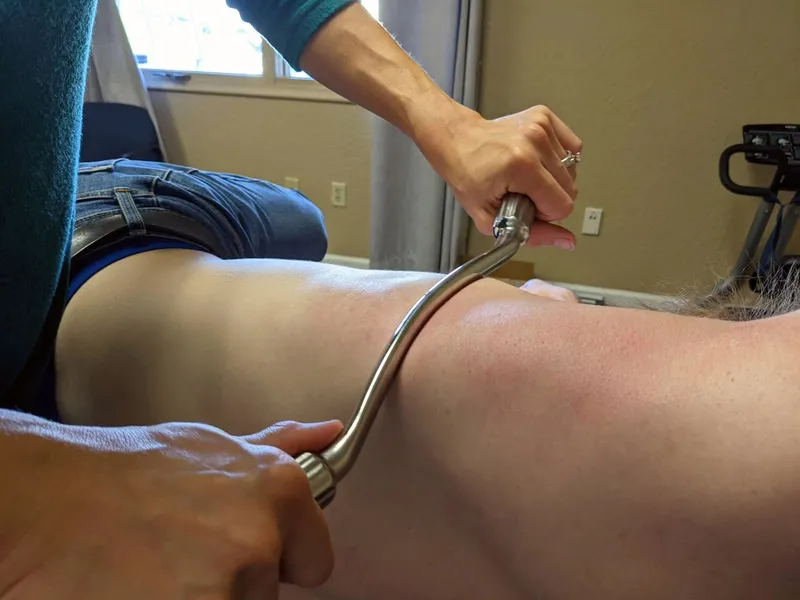
Instrument-assisted soft tissue work that releases scar tissue, adhesions and fascial restrictions.

Restore the connection between your nervous system and the muscles that have stopped doing their job.

Shoulder pain is not always a shoulder problem. We look at the neck, upper back and nerves too.